
CBT vs Somatic Therapy: What's the Difference & Which Is Right for You?
Published: April 2025 | Last reviewed: August 2025
Please note: This post discusses trauma, abuse, and related emotional experiences. If reading this brings up difficult feelings, please visit our Resources page or get in touch, we're here to help.
Verinder Sharma | Somatic Experiencing Practitioner (SEP), trained in Compassionate Inquiry (Dr Gabor Maté - short course). Verinder works with individuals navigating trauma, anxiety, burnout, and nervous system dysregulation through online somatic therapy sessions in English and Spanish.

elixir /ɪˈlɪksɪə,ɪˈlɪksə/
|| The Soma Experience ||
noun
A magical or medicinal potion that heals or cures
If you're looking for therapy, especially for trauma, anxiety, or stress, you've probably come across both CBT and somatic therapy. They are two of the most widely used therapeutic approaches, but they work in fundamentally different ways, and they are not equally suited to every situation.
This article explains what each approach is, what it helps with, and the key differences, so you can make an informed choice about what's right for you.
What is Cognitive Behavioural Therapy (CBT)?
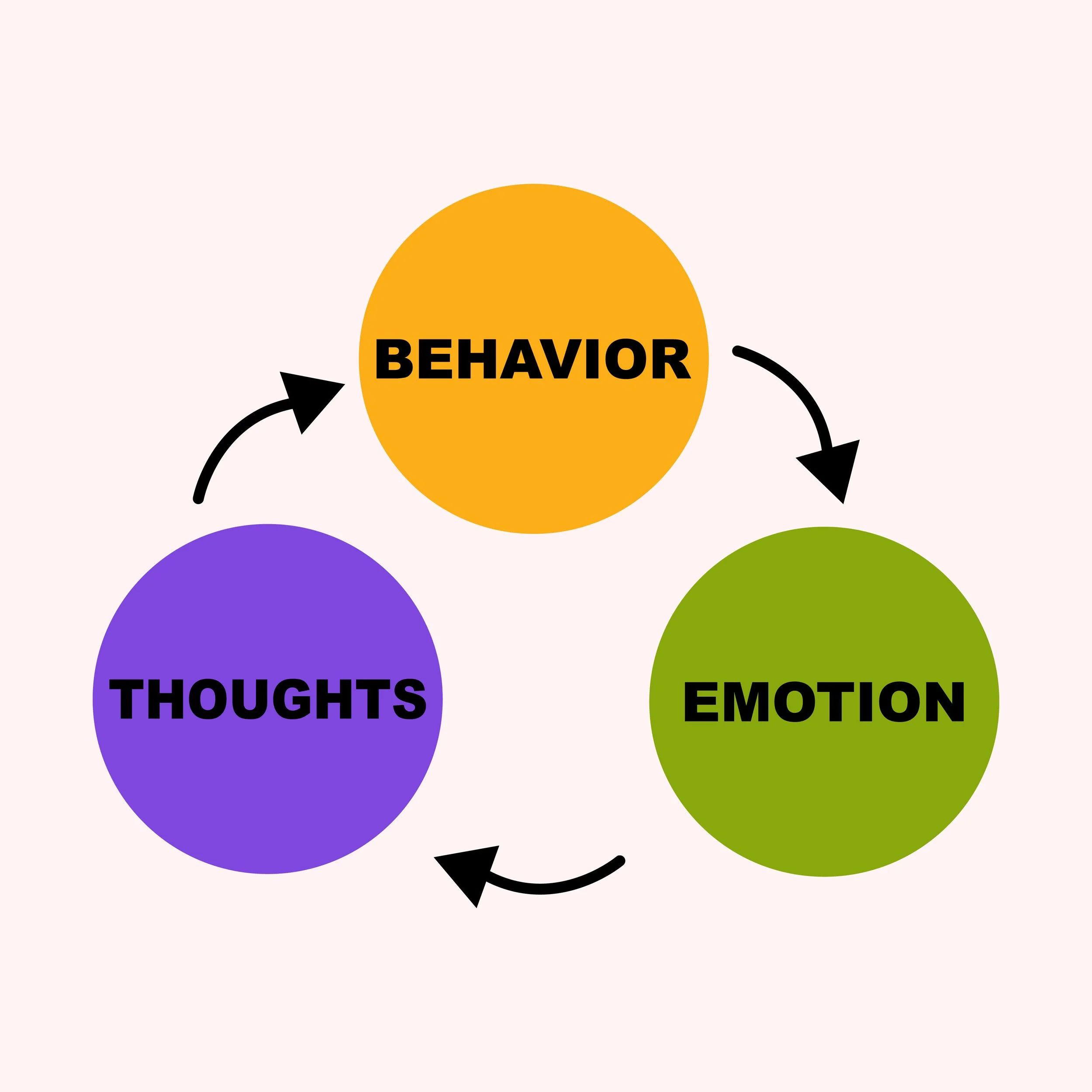
Cognitive Behavioural Therapy is a structured, talking-based therapy that works with the relationship between thoughts, feelings, and behaviours. The premise is straightforward: if we can identify and change unhelpful thought patterns, we can change how we feel and behave.
CBT is the most commonly prescribed therapy through the NHS and public health systems, partly because it has been in use longest and has a substantial evidence base. It can be effective for managing anxiety and mild to moderate depression, and it is widely available both in-person and online.
However, CBT has significant limitations when it comes to trauma, particularly complex or developmental trauma. Because it works primarily through the mind and language, it does not directly address what is happening in the nervous system. As Dr Bessel Van der Kolk puts it:
"Trauma has nothing whatsoever to do with cognition. It has to do with your body being reset to interpret the world as a dangerous place." — Dr Bessel Van der Kolk, New York Times Magazine
For many people with trauma histories, talking about what happened, without working with the body's response, can actually reactivate the nervous system and re-traumatise rather than heal.
CBT works well for:
Mild to moderate anxiety
Mild to moderate depression
Specific phobias and OCD
Cognitive restructuring (changing thought patterns)
CBT is less effective for:
Complex or developmental trauma
PTSD
Conditions rooted in nervous system dysregulation
Situations where talking about the event feels overwhelming or re-activating
What is Somatic Therapy?
Somatic therapies — including Somatic Experiencing (SE), developed by Dr Peter Levine — are mind-body approaches that work with the nervous system through awareness of bodily sensations. Rather than focusing primarily on thoughts and narratives, somatic therapy recognises that trauma is held in the body and must be addressed there.
Somatic therapies are grounded in the latest neuroscience. They work with the entire organism — brain, nervous system, and body — rather than the mind alone. This includes supporting the prefrontal cortex to stay online under stress, allowing for self-reflection, emotional regulation, and problem-solving even in difficult moments.
As Dr Peter Levine explains, trauma is an incomplete fight, flight, or freeze response. The body mobilised for survival, couldn't complete the action, and the unresolved energy remained in the nervous system. Somatic therapy works to complete what was left unfinished — gently, incrementally, and at the pace of the nervous system.
For more on how trauma lives in the body, see: How Trauma Lives in the Body: Somatic Experiencing & the Nervous System
Somatic therapy works well for:
Complex and developmental trauma
PTSD and CPTSD
Anxiety and chronic stress
Burnout and nervous system dysregulation
Chronic pain linked to trauma
Emotional numbness or disconnection
Addictions and compulsive patterns
Conditions that haven't responded to talk therapy alone
Not sure which approach is right for you?Book a free 20-minute consultation - we can explore what would suit your nervous system and situation best.
CBT vs Somatic Therapy: Key Differences
Top-Down vs Bottom-Up
CBT is a top-down therapy - it starts with the mind. The focus is on cognition: identifying and reframing unhelpful thoughts, changing behavioural patterns, and developing coping strategies through language and reasoning.
Somatic therapy is a bottom-up therapy - it starts with the body. The focus is on sensation: what is the body feeling right now? Where is that felt? What happens when we stay with it? By working at the level of the nervous system, somatic therapy addresses the physiological roots of distress rather than only its cognitive expression.
How Sessions Feel Different
In CBT, talking is the primary medium. The therapist listens, reflects, and offers reframes or strategies based on what the client shares. The body is largely absent from the process.
In somatic therapy, there is talking, but it is regularly interrupted. The therapist will pause the story to bring attention back to the body: "What do you notice in your body as you say that?" Moments of quiet, of tracking sensation, of simply staying present with what is arising, these are not gaps in the work. They are the work.
The Therapist Relationship
The traditional psychological model, rooted in Freudian thinking, positions the therapist as the expert on the client's inner life. The therapist interprets, advises, and directs.
In somatic therapy, the relationship is one of equals. The therapist provides a safe and compassionate space, with guidance, but the fundamental assumption is that the client knows their own life, and the client's nervous system knows how to heal. The therapist's role is to create the conditions for that healing to happen, not to direct or prescribe it.
How Trauma is Addressed
CBT can help identify repeated behavioural patterns and unhelpful beliefs that have shaped a person's life. However, because it largely bypasses the body, retelling trauma in a CBT session can cause the nervous system to respond as though the event is happening now, which can overwhelm and re-traumatise.
Somatic therapy addresses trauma at the level where it is actually stored: the nervous system. Rather than retelling the story in full, SE works in small increments, moving between activation and resource, allowing the nervous system to discharge stored energy safely and gradually. This changes the neurobiological infrastructure of how the person relates to stress, not just their thoughts about it.
“Before, I was feeling dysregulation, sadness, frustration/anger. Coming from CBT Therapy, I was drawn to the Somatic Experiencing Therapy approach as it gave me the opportunity to fully embody and process my emotions vs intellectualise them.
I noticed the calm and safety it gave my body thereafter when emotions were worked through. Also, I drew on learnings and tools through day-to-day life after sessions.
Now, I'm more equipped with tools and connected to my mind-body to help manage experiences/emotions as they come.
If you’re somebody that tends to intellectualise your experience, trauma, or emotions, Somatic Experiencing therapy is a great method to be open to and try.”
Tyra - Client Testimonial
A Visual Comparison
Approach:
CBT Top-down (mind first)
Somatic Therapy (SE) Bottom-up (body first)
Primary method:
CBT Talking and cognitive reframing
SE Sensation tracking and nervous system regulation
Body involvement:
CBT Minimal
SE Central
Trauma suitability:
CBT Limited for complex trauma
SE Well-suited for all trauma types
Session style:
CBT Structured, directive
SE Relational, sensation-led
Therapist role:
CBT Expert guide
SE Compassionate witness and facilitator
Evidence base:
CBT Established (longer history)
SE Growing (based on latest neuroscience)
Best for:
CBT Anxiety, mild depression, thought patterns
SE Trauma, PTSD, chronic stress, nervous system dysregulation
Do You Have to Choose?
Not necessarily. CBT and somatic therapy are not mutually exclusive, and some people find value in both at different points in their healing journey. CBT can be useful for developing cognitive tools and practical strategies, while somatic therapy works on the deeper physiological patterns that underlie them. That said, if your struggles are rooted in trauma — especially if talking about your experiences feels reactivating, or if previous talk therapy hasn't brought lasting relief — a body-based approach may reach what talking alone cannot. Trauma is also closely linked to conditions such as anxiety, depression, and PTSD. If you recognise yourself in what's described here, know that recovery is possible. Read more about what trauma is and how to recognise it.
Grounding Practice: Expand Your Vision
Trauma can narrow our perception — literally. Notice your eyesight right now. Are you seeing the world through a narrow tunnel, or can you take in the periphery of your vision? Try softening your gaze. Without moving your eyes, allow your awareness to expand outward — to what's in the edges of your visual field, to the space around you. Notice whether your breath changes. Notice whether your body settles. This gentle expansion of peripheral vision activates the parasympathetic nervous system — your body's rest and restore mode.
Frequently Asked Questions
Is somatic therapy better than CBT for trauma? For most trauma, especially complex or developmental trauma, somatic approaches tend to be more effective because they work at the level of the nervous system, where trauma is held. CBT can be helpful for anxiety and mild depression, but is limited in its ability to address the physiological roots of trauma.
Can I do somatic therapy if I've already had CBT? Absolutely. Many clients come to somatic therapy after CBT, sometimes having found it helpful for certain things but not for deeper trauma. The approaches work at different levels and can complement each other.
Is somatic therapy evidence-based? Yes. Somatic Experiencing and other body-based therapies are grounded in decades of neuroscience research, including the work of Dr Peter Levine, Dr Bessel Van der Kolk, and Dr Stephen Porges (Polyvagal Theory). The evidence base is growing rapidly. The NHS has historically favoured CBT due to its longer institutional history, but this is changing.
What if I find it hard to talk about what happened? Somatic therapy may be particularly well-suited to you. Unlike CBT, SE doesn't require extended retelling of the trauma story. We work with what's present in the body right now, which means you don't have to go back through everything in detail to begin healing.
Is online somatic therapy effective? Yes, both research and clinical experience support the effectiveness of online somatic therapy. Many clients find that working from a familiar, safe environment actually supports the process. Soul Somatic Therapy works with clients online across the UK and internationally.
How do I know which therapy is right for me? The best starting point is a conversation. In a free consultation, we can explore your history, what you've already tried, and what your nervous system needs, and from there, make a considered decision together.
Summary
CBT and somatic therapy both have genuine value — but they work differently, reach different parts of the system, and are suited to different situations. CBT is structured, cognitive, and well-established for anxiety and mild depression. Somatic therapy — particularly Somatic Experiencing — works with the body and the nervous system, making it particularly effective for trauma, PTSD, chronic stress, and conditions that haven't responded to talking alone. Both approaches are available online. What matters most is finding the right fit for where you are and what you're carrying.
Book a free consultation to find out whether somatic therapy is the right next step for you.
Related reading:

|| The Soma Experience ||
elixir /ɪˈlɪksɪə,ɪˈlɪksə || The Soma Experience ||
“A magical or medicinal potion that heals or cures”