
Intergenerational Trauma Explained: Signs, Science & How to Heal Through Somatic Therapy
Published: January 2026 | Last reviewed: August 2026
Please note: This post discusses intergenerational trauma, ancestral wounds, and related emotional experiences. If reading this brings up difficult feelings, please visit our Resources page or get in touch - we're here to help.
Verinder Sharma | Somatic Experiencing Practitioner (SEP), trained in Compassionate Inquiry (Dr Gabor Maté - short course). Verinder works with individuals navigating trauma, anxiety, burnout, and nervous system dysregulation through online somatic therapy sessions in English and Spanish.

Intergenerational Trauma
Healing Through Somatic Therapy
In a well-known epigenetics study, researchers exposed rats to a mild electric shock paired with the smell of cherry blossom. Shockingly, their pups, who were never exposed to the shock, showed the same fear response.
This reveals something profound: intergenerational trauma, also known as ancestral trauma, can live in the body across generations, not as memory or story, but as physiology.
In this article, we explore:
What intergenerational trauma is
How trauma is passed down, epigenetics, the nervous system, and environment
Signs and symptoms to look out for
Indigenous wisdom and resilience
How somatic therapy supports healing across generations
Healing is possible. Through neuroplasticity, the body can reorganise. The nervous system can shift. Trauma patterns can be completed and released, with safety, support, and time.
What Is Intergenerational?
Intergenerational trauma (also called ancestral trauma, historical trauma, or collective trauma) refers to the emotional, psychological, and physiological effects of trauma that are passed from one generation to the next.
This may arise from:
War, colonisation, or displacement - including the African Transatlantic slave trade, political conflicts, and forced migration
Cultural oppression and assimilation
Family violence or addiction
Chronic stress, poverty, or instability
Genocide or systemic persecution
We inherit more from our ancestors than eye colour or height. We inherit nervous system patterns, survival states, and emotional imprints, and often, we carry them without knowing where they came from.
For a broader understanding of trauma and how it presents, see: What Is Trauma? Causes, Symptoms & How Somatic Therapy Can Help
Signs and Symptoms of Intergenerational Trauma
You may sense trauma inside you that has no clear origin. This is common, and it is one of the most telling signs of ancestral trauma.
Emotional and psychological signs:
Lingering grief without an obvious cause
Anxiety, hypervigilance, or emotional shutdown
Difficulty regulating emotions
Repeating relationship patterns across generations
A persistent sense of not being safe, even when nothing is wrong
Family and relational patterns:
Similar struggles repeating across generations
Inherited beliefs about safety, love, or self-worth
Feeling loyal to your family by unconsciously repeating their struggles
Difficulty breaking cycles you can clearly see
Body-based symptoms:
Chronic tension or unexplained physical pain
A sense of "carrying something that isn't mine"
Numbness, disconnection, or a feeling of being frozen
Responses to stress that feel disproportionate to what's happening
Many people experience intergenerational trauma as a body memory rather than a story, a felt sense of something ancient, without words or images to explain it.
How Is Intergenerational Trauma Passed Down?
1. Epigenetics and Trauma
Research by Dr Rachel Yehuda and her team showed that children of Holocaust survivors have altered cortisol patterns, the hormone responsible for regulating the stress response. Their nervous systems were shaped by their parents' trauma before they ever encountered threat themselves. Epigenetics, the study of how environment influences gene expression, is revealing that trauma can change not just the person who experienced it, but how their genes express themselves in subsequent generations, particularly in the stress-response system. The experience doesn't have to be remembered to be felt.
2. The Nervous System and Early Attachment
Traumatised or chronically stressed parents may struggle with emotional attunement, eye contact, physical affection, and the natural cycle of rupture and repair that healthy attachment requires. For babies, whose nervous systems are entirely dependent on co-regulation with a caregiver, this shapes everything, how safe the world feels, how emotions are processed, what relationships come to mean. We are born wired for connection. It is how the nervous system learns safety, and when that learning is disrupted, the pattern passes on.
3. Behavioural and Environmental Transmission
As Dr Gabor Maté puts it: "We recreate the stress we know." If a parent lived in conflict, emotional instability, scarcity, mistrust, or chronic stress, the child's nervous system often mirrors that environment, not because of choice, but because the body learns from what surrounds it. Behaviours, coping strategies, and relational patterns are absorbed long before they can be questioned.
4. Family Loyalty and Unconscious Burden-Carrying
Children often carry what their parents or grandparents could not. Out of love, and without any conscious awareness, they take on grief, fear, and survival strategies that were never theirs to carry. This is sometimes called a family loyalty bind, and it can shape an entire life.
Intergenerational Resilience - The Forgotten Inheritance
Trauma is not the only thing passed down. Resilience is inherited too. I once lived with an Indigenous community, and I will never forget seeing four generations sitting together, peacefully grooming each other's hair. Four nervous systems, co-regulating in harmony. It was one of the most powerful things I have ever witnessed. This too is stored in the body:
Safety and belonging
Compassion and touch
Community wisdom
The capacity to endure, adapt, and return to life.
We do not only inherit wounds. We inherit strength.
Indigenous Wisdom and the Next Seven Generations
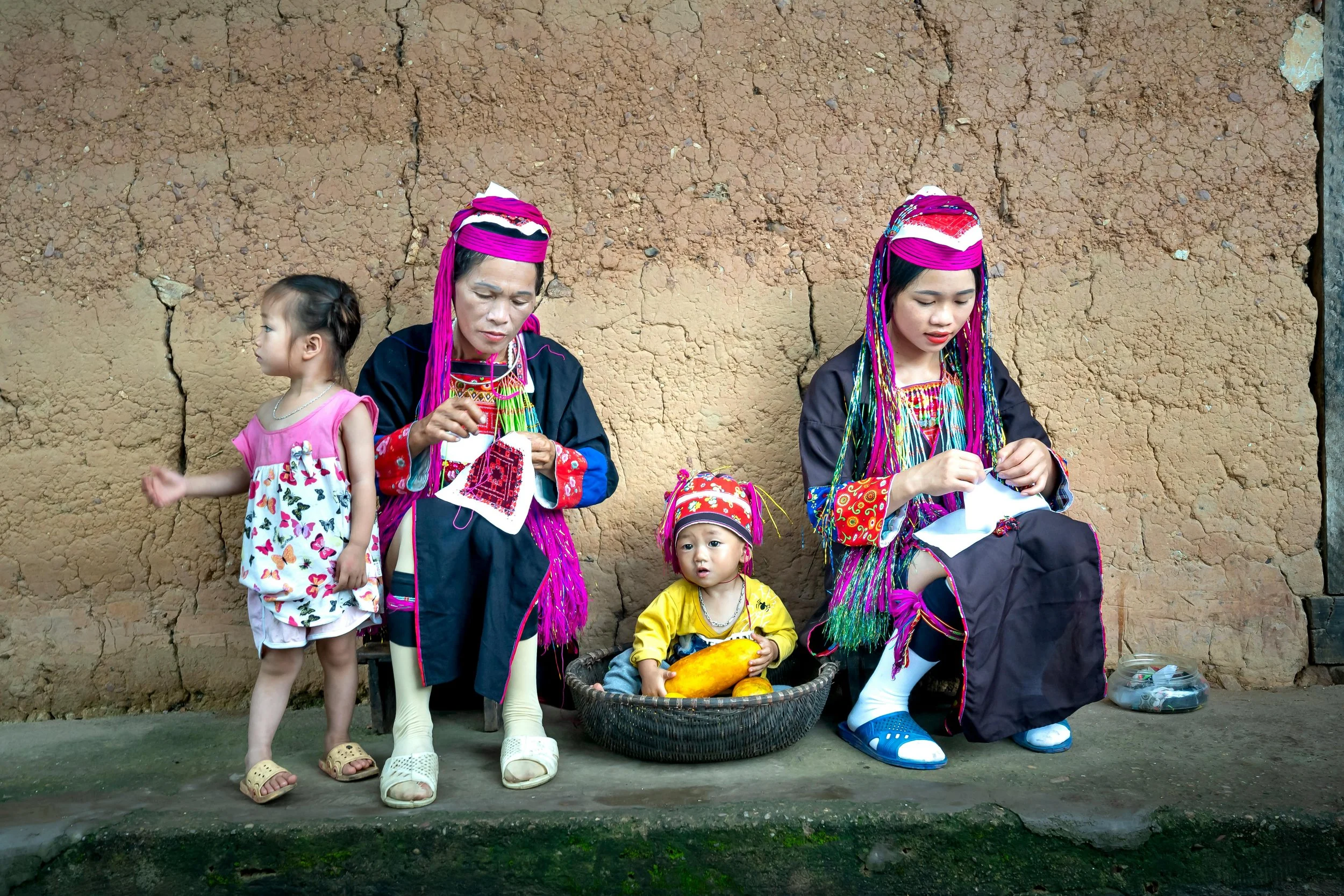
This wisdom holds that:
healing is communal
the earth is an ancestor
we are shaped by those before us
and we shape those who will follow
Indigenous teachers often say trauma “takes your breath” or leaves a dark spot. Breath, somatic experiencing, and presence work all help restore that lost life force.
Many Indigenous cultures have long held what science is only now beginning to name. The Haudenosaunee (Iroquois) speak of the Seven Generations Principle, the understanding that our choices today will shape the lives of those seven generations from now, just as we are shaped by those seven generations before us. This wisdom holds that: Healing is communal, not individual The earth itself is an ancestor We are formed by those who came before us And we form those who will follow Indigenous teachers often say trauma "takes your breath" or leaves a dark spot. Breath work, Somatic Experiencing, and presence practices all help restore that lost life force, returning us to what was always there beneath the wound.
If you're recognising these patterns in yourself, you don't have to navigate them alone. Book a free 15-minute consultation to explore how somatic therapy can help you heal what was passed down.
Can Intergenerational Trauma Be Healed?
Yes. Healing intergenerational trauma involves: Recognising repeating patterns Feeling the sensations held in the body, rather than avoiding them Completing survival responses that were never finished Releasing inherited stress patterns from the nervous system Connecting to ancestral resilience alongside ancestral pain Creating new nervous system pathways through safety and support. This is not quick work. But it is real work, and it changes not only you, but what you pass on.
How Somatic Therapy Supports Intergenerational Healing
Somatic Experiencing (SE) is particularly well suited to intergenerational trauma, because it works at the level where that trauma is stored: the body and the nervous system, not just the mind and narrative. Many people find that they cannot fully access intergenerational trauma through talking alone. There is no clear story to tell. What they sense is a physical inheritance, a tension, a contraction, a vigilance, that arrived before language. SE works with precisely this: the pre-verbal, pre-cognitive body.
In sessions, we work gently with:
Body sensations and the felt sense of inherited patterns
Survival states that may not belong to your own life story
Stuck emotional cycles and family loyalty binds
Ancestral wounds held in the nervous system
The resilience and resources that live in your body alongside the pain
We do not push into overwhelm. We work incrementally, at the pace your nervous system can tolerate, helping it to do what it couldn't do in the past: release, repair, reorganise, and return to safety.
For more on how SE works with trauma in the body, see: How Trauma Lives in the Body: Somatic Experiencing & the Nervous System Sessions are available online, in English and Spanish, for clients across the UK and internationally.
If You're Reading This, It May Be Your Time
If you're becoming aware of intergenerational trauma, in your body, in your patterns, in the quiet sense that something doesn't quite belong to you, it may be because you are the one in your lineage ready to transform it.
If not you, then who? If not now, then when?

“Having sessions was extremely beneficial to me and helped me overcome so much. He was extremely welcoming and patient with me and always listened. I overcame so much of my anxiety and was able to actually leave my house and not have a panic attack. I’ve achieved so much in my life now because of this and cannot thank Verinder enough!
I’m extremely thankful towards him and how much he helped me.“
Jess, Client Testimonial
You are resilient, even if you cannot feel it right now.
Book a free consultation to begin your healing journey.
Frequently Asked Questions About Intergenerational Trauma
What is the difference between intergenerational trauma and PTSD? PTSD arises from a person's own direct traumatic experience. Intergenerational trauma is inherited, the physiological and emotional imprint of trauma experienced by ancestors, passed down through epigenetics, nervous system patterns, and family environment. Someone can carry intergenerational trauma without having experienced overt trauma in their own life.
Can intergenerational trauma be healed without knowing the full family history? Yes. Somatic therapy works with what is present in the body right now, not with a detailed ancestral narrative. You don't need to know exactly what happened or to whom. The body holds what it holds, and that is what we work with.
What does epigenetic trauma mean? Epigenetics is the science of how environment and experience influence which genes are expressed, without changing the DNA itself. Epigenetic trauma refers to the way traumatic stress can alter gene expression in the stress-response system, changes that can be passed to subsequent generations. Research by Dr Rachel Yehuda has demonstrated this in Holocaust survivors and their children.
How is somatic therapy different from talk therapy for intergenerational trauma? Talk therapy works primarily through language and cognition, which is useful, but limited for trauma that was never encoded in language to begin with. Somatic therapy works with the body and nervous system directly, making it particularly effective for the pre-verbal, pre-cognitive imprints of intergenerational trauma.
Is online somatic therapy effective for intergenerational trauma? Yes, and many clients find that working from their own home environment actually supports a sense of safety, which is foundational to this kind of work. Soul Somatic Therapy offers online sessions across the UK and internationally, in English and Spanish.
How many sessions does it take to heal intergenerational trauma? This varies significantly depending on the depth of the patterns and your nervous system's capacity. Intergenerational trauma often requires patient, ongoing work rather than a short course. We explore this together in your free consultation, and work at a pace that honours where you are.
Summary
Intergenerational trauma is real, it is physiological, and it is more common than most people realise. It lives in the body as survival patterns, emotional imprints, and nervous system states, passed down across generations through epigenetics, attachment, and environment. But so does resilience. So does the capacity for healing. Somatic therapy works with the body's own intelligence to complete what was left unfinished across generations, gently, safely, and at a pace that respects your nervous system. As the body begins to settle, inherited patterns begin to shift. What you pass on changes too.
Book a free consultation to explore how somatic therapy can support intergenerational healing.
Related reading: