
Moving Country & the Hidden Overwhelm: A Somatic Guide for Expats and Digital Nomads
Published: January 2026 | Last reviewed: January 2026
Please note: This post discusses trauma, abuse, and related emotional experiences. If reading this brings up difficult feelings, please visit our Resources page or get in touch, we're here to help.
This article discusses the what trauma is, the causes, the various types of trauma, trauma symptoms, and some treatments.
For expats, and digital nomads navigating life across borders
Moving to a new country is often framed as an adventure. New cultures, new opportunities, new versions of ourselves. Yet for many expats and digital nomads, there is a quieter, less spoken about reality that emerges weeks or even months after saying yes to the move: overwhelm.
Before I share the somatic lens, I want to share something personal.
My Story: When Excitement Turned Into Dread
I got the job.
I was excited. I was moving to another country. There was sunshine to look forward to, a new culture, a different language. All the things that usually light me up. From the outside, it looked like a dream opportunity.
And then I had to organise myself for the move.
That’s when I found myself lying on my bed, staring at the ceiling for hours. Dread and anxiety rushed through my body. My thoughts spiralled:
Why did I apply for this job?
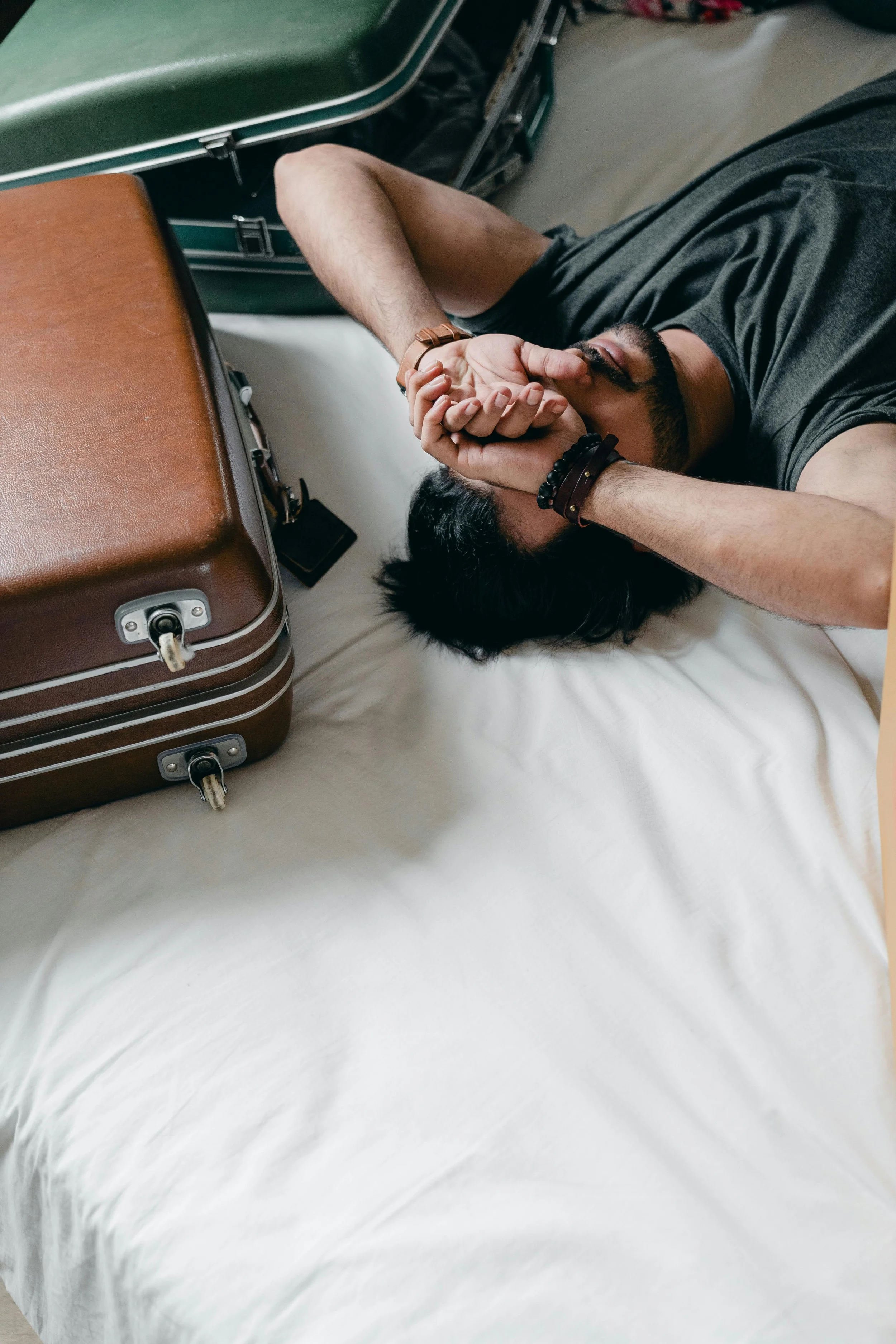
The feelings were so intense that I felt incapable of even sitting up, let alone doing everything I had to do. Strangely, being with the anxiety—even as tough as it was—felt easier than facing the fear of actually taking action.
I carried this heavy feeling with me for weeks. I even told my manager that I wished I hadn’t applied for the job, despite the pay rise, the rent being covered, and all the external signs that I should feel grateful.
So what was happening?
The Overwhelm No One Warns You About When Moving Abroad
Even when a move is chosen, well-planned, and deeply desired, your nervous system experiences it as a major life event.
When you move country, your body is processing:
Loss of familiar routines, language, food, and social cues
Separation from family, friends, and support systems
Cultural adaptation and constant decision making
Uncertainty around identity, belonging, and safety
Pressure to “make it worth it” because this was your choice
This can show up as:
Anxiety or low-level panic without a clear reason
Chronic tiredness or burnout
Difficulty sleeping or concentrating
Emotional numbness or homesickness you didn’t expect
A sense of being "on edge" or never fully settled
From a somatic perspective, this isn’t weakness, it’s biology.
What Was Really Happening in My Body
What I didn’t understand at the time was that I wasn’t failing at change, I was overwhelmed.
The sheer volume of things I had to do, combined with my personal history of abuse, activated deep fear circuits in my nervous system. My brain shifted into survival mode, reverting to more primitive parts that are designed to keep us alive, not organised or future focused.
In that state:
Decision-making becomes almost impossible
The body feels frozen or collapsed
Fear overrides logic and reassurance
You can feel helpless, even when nothing is “wrong” on paper

I had been to talk therapy, and while it helped me understand why I felt the way I did, something essential
was missing: calm coherence in my body.
Talking therapies don’t directly address what’s happening in the nervous system. When the body doesn’t feel safe, insight alone isn’t enough to regulate overwhelm.
Why Expats and Digital Nomads Are Especially Affected
Expats and digital nomads often pride themselves on resilience. You adapt quickly. You solve problems. You keep moving.
But the nervous system doesn’t reset just because your visa was approved or your apartment looks great on Instagram.

Many expats live in a state of functional survival mode:
Navigating bureaucracy in a second or third language
Rebuilding social connections from scratch
Holding cultural micro-stressors every day
Balancing work performance with personal instability
Over time, this can lead to chronic nervous system activation, where your body never fully feels safe enough to rest.
A Somatic Lens: Moving Country Is a Nervous System Transition
Somatic Experiencing therapy works with the body, not just the mind.
Rather than asking, “What’s wrong with me?” we ask:
“What has my nervous system been asked to carry?” and move to the body’s sensations.
When you move countries, your system is constantly scanning:
Am I safe here?
Do I belong?
What are the rules?
Who can I rely on?

Until these questions are answered at a felt, bodily level, the sense of overwhelm often remains—even if logically everything is fine.
Signs Your Body Is Still Adjusting to Life Abroad
You might benefit from somatic support if you notice:
You feel settled on paper, but unsettled inside
Small challenges feel disproportionately stressful
You miss “home” but can’t define what home means anymore
You struggle to feel rooted in your new country
You feel pressure to be grateful while secretly struggling
These are common experiences within the InterNations and wider expat community, and they deserve care, not minimisation.
How Somatic Therapy Supports Expats and InterNations Members
In my work with expats, international professionals, and digital nomads, somatic experiencing therapy helps to:
Gently regulate the nervous system before and after relocation
Release accumulated stress held in the body
Build a felt sense of safety in a new environment
Support identity shifts that come with living internationally
Create internal grounding when external life feels unstable
Sessions are especially helpful if you:
Have moved country recently (or multiple times) or will do soon
Live between cultures or identities
Feel emotionally disconnected despite external success
Want deeper integration, not just coping strategies
I offer online somatic experiencing therapy sessions designed specifically for the expat and international community, including InterNations members.
You Don’t Need to Be in Crisis to Seek Support
One of the biggest myths in expat life is that struggle only “counts” if something is objectively wrong.
Relocation itself is enough.
Somatic Experiencing therapy offers a space where you don’t need to justify your feelings or explain your story perfectly, your body already knows it.
If You’re Feeling This Too, I Understand
If you’re feeling overwhelmed by a move to a new country, a new home, or a completely new lifestyle, I truly understand where you’re coming from.
Life transitions can be tough, even when the change is one you chose, even when it will ultimately transform you. I went on to learn a new language, Spanish, and build a life abroad, but my body needed support before it could get there.
There is a way to bring calm, and it’s not by thinking your way through it.
Calm comes from bringing awareness into the body. When you do this, you become response-able again, able to meet what’s in front of you without being overwhelmed by it.
If you have a history of trauma, this process isn’t always straightforward. That’s where working with a Somatic Experiencing therapist can make a profound difference.
An Invitation for Expats & Digital Nomads
If you’re an expat, or digital nomad feeling overwhelmed after moving country, you’re not alone, and you don’t have to navigate this transition by yourself.
I offer online Somatic Experiencing therapy sessions specifically for the international and expat community, supporting nervous system regulation during major life transitions.
This is the first in a blog series exploring expat life through a somatic lens, including belonging, identity, relationships, and burnout abroad.
Wherever you are in the world, your nervous system deserves a sense of home.
Author Bio
Soul Somatic Therapy is founded by Verinder Sharma, a Somatic Experiencing Practitioner (SEP) therapist and former international finance professional who has lived and worked across multiple countries. After experiencing firsthand the hidden nervous system impact of relocation, career transitions, and life abroad, he now supports expats, InterNations members, and globally mobile professionals through somatic experiencing therapy.
His work focuses on helping people regulate overwhelm, anxiety, and burnout during major life transitions, especially moving country, adapting to new cultures, and rebuilding a sense of belonging. He offers online sessions for the international community, integrating trauma-resolution, body-based approaches that go beyond traditional talk therapy.